

Professional bodies play a vital role in enhancing technical knowledge, leadership skills, and industry exposure for engineering students. They provide platforms for learning beyond the classroom, facilitate interaction with industry experts and alumni, and encourage participation in technical competitions, research activities, outreach programs, and professional development initiatives. The Department of Chemical Engineering actively engages students through three major professional bodies: the American Institute of Chemical Engineers (AIChE), the Indian Institute of Chemical Engineers (IIChE), and the Institution of Engineers (India) [IE(I)]. Each organization offers unique opportunities that contribute to the holistic development of future chemical engineers.
American Institute of Chemical Engineers (AIChE)
AIChE is a global professional organization for chemical engineers, with members from academia, industry, and research institutions. It provides resources for professional development, networking, technical conferences, publications, and certifications. The society promotes innovation and ethical practices in chemical engineering worldwide. Our departmental AIChE chapter was inaugurated in March 2025, creating a platform for students to connect with global trends, enhance technical knowledge, and engage in leadership and professional development opportunities.
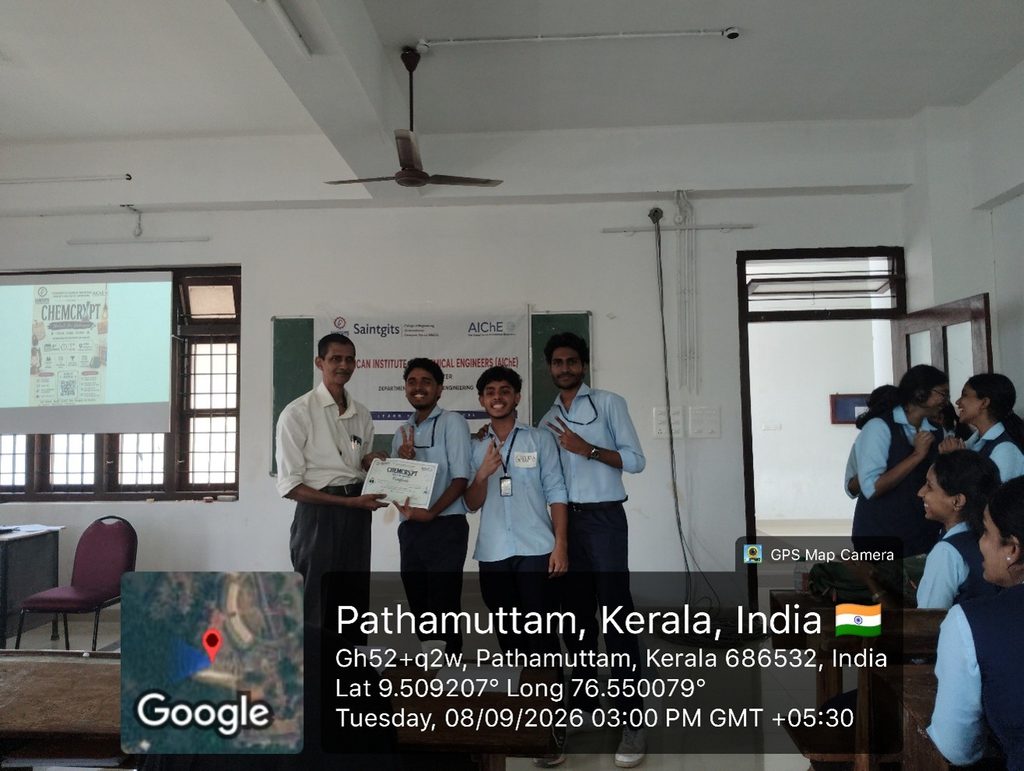
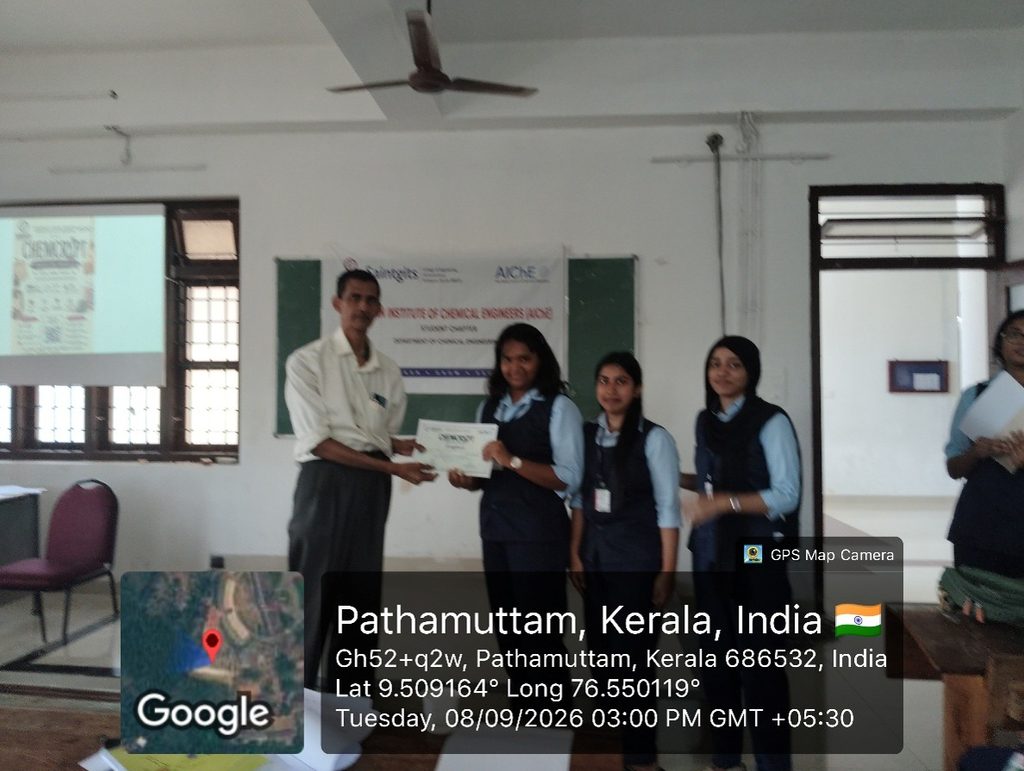
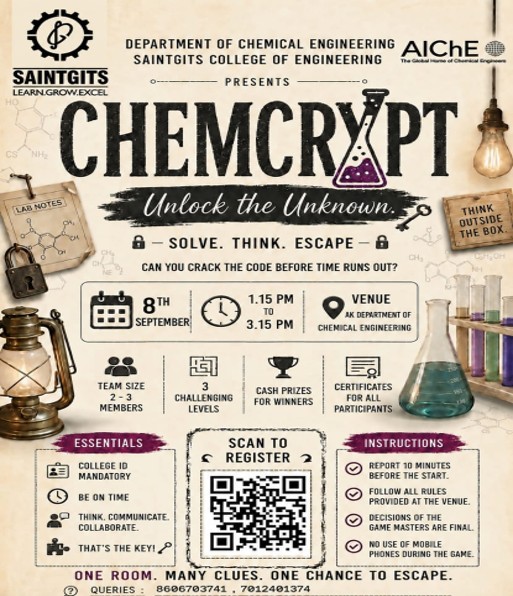
REPORT ON CHEMCRYPT 2026
“Unlock the Unknown – Solve. Think. Escape.”
Department of Chemical Engineering
Saintgits College of Engineering
in association with AIChE
| Date | 8 August 2026 |
| Time | 1:15 PM – 3:15 PM |
| Venue | Department of Chemical Engineering |
| Team Size | 2–3 members |
1. Introduction
The Department of Chemical Engineering, Saintgits College of Engineering, in association with the American Institute of Chemical Engineers (AIChE), organized CHEMCRYPT 2026, an innovative chemistry and chemical engineering-based escape-room competition under the theme “Unlock the Unknown – Solve. Think. Escape.” The programme was designed to provide students with an engaging platform to apply their academic knowledge, logical reasoning, teamwork and problem-solving abilities in a challenging and enjoyable environment.
The activity combined chemical engineering concepts, puzzles, clues, logical challenges and time-bound decision-making to create an experiential learning environment beyond the conventional classroom.
2. Objectives of the Programme
- Encourage students to apply chemical engineering and scientific concepts in practical situations.
- Develop logical thinking and problem-solving skills.
- Promote teamwork, communication and collaboration among students.
- Encourage students to think creatively and approach problems from different perspectives.
- Provide an innovative and engaging learning experience through a gamified activity.
- Develop the ability to work effectively under time constraints.
- Strengthen students’ interest in chemical engineering through experiential learning.
3. Programme Description
CHEMCRYPT 2026 was conducted as a team-based chemical engineering escape-room challenge. Students participated in teams of 2–3 members and were required to solve a series of challenging clues and puzzles within the stipulated time.
The competition consisted of three challenging levels, with each level requiring participants to demonstrate a combination of subject knowledge, observation, logical reasoning, communication and teamwork. Participants had to decode clues, identify connections and solve problems progressively to advance through the challenge.
The programme followed the concept of “One Room. Many Clues. One Chance to Escape.” The time-bound nature of the activity added an element of excitement while encouraging students to make quick and rational decisions.
4. Conduct of the Programme
Participants reported at the venue before the scheduled commencement of the event. The rules and instructions were explained by the coordinators/game masters before the beginning of the competition.
The participants then entered the challenge area and worked collaboratively to solve the clues presented at different stages. The activity required them to analyse the given clues, identify scientific and logical relationships, communicate ideas within the team, divide tasks among team members, make decisions within a limited time and progress through the different levels of the challenge.
The Game Masters’ decisions were final, and participants were required to follow the rules provided at the venue. Mobile phones were not permitted during the game, thereby encouraging participants to rely on their own analytical and collaborative abilities.
5. Skills Developed
| Skill | Development through CHEMCRYPT |
| Problem solving | Solving multi-stage clues and challenges |
| Critical thinking | Analysing information and identifying relationships |
| Teamwork | Working collaboratively towards a common goal |
| Communication | Sharing ideas and strategies within the team |
| Creativity | Exploring unconventional approaches to problems |
| Time management | Completing challenges within the allotted time |
| Decision making | Selecting appropriate solutions under pressure |
| Scientific thinking | Applying chemistry and chemical engineering concepts |
6. Outcomes of the Programme
- Enhanced problem-solving ability through analysis of complex problems and development of suitable solutions.
- Improved teamwork and communication through collaborative interaction and decision-making.
- Application of academic knowledge by connecting classroom concepts with practical challenges.
- Development of critical and creative thinking by examining problems from multiple perspectives.
- Improved time-management skills through prioritisation of tasks within a limited time.
- Increased student engagement through a gamified and interactive learning environment.
7. Student Participation and Engagement
The competition encouraged active participation from students and provided an opportunity for them to interact with their peers in an informal learning environment. The combination of scientific challenges, puzzles and competition helped create enthusiasm among the participants.
The programme also provided students with an opportunity to demonstrate skills that are important for professional chemical engineers, particularly teamwork, analytical reasoning, communication, decision-making and problem-solving.
8. SDG Alignment
SDG 4 – Quality Education: Promoted experiential, activity-based and student-centred learning, complementing conventional classroom education.
SDG 9 – Industry, Innovation and Infrastructure: Encouraged creativity, innovative thinking and problem-solving approaches relevant to engineering education.
SDG 17 – Partnerships for the Goals: The programme was conducted in association with AIChE, supporting professional engagement and collaborative learning.
9. Conclusion
CHEMCRYPT 2026 successfully transformed chemical engineering learning into an engaging, challenging and collaborative experience. The escape-room concept provided students with an opportunity to solve, think, communicate and collaborate while working under time constraints.
The programme helped bridge the gap between theoretical learning and practical problem-solving by encouraging students to use their knowledge creatively. Overall, CHEMCRYPT 2026 served as an effective student-engagement activity that promoted critical thinking, teamwork, creativity, communication and experiential learning among chemical engineering students.
Faculty Coordinator: Dr Neetha John, Professor, Department of Chemical Engineering
- Student coordinator: The President: Ms. Richa Mariyam Joby, S7 Chemical Engineering
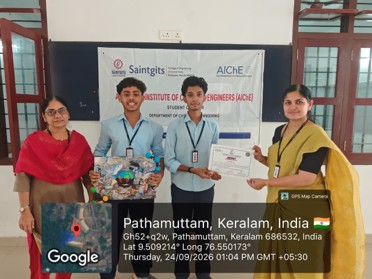
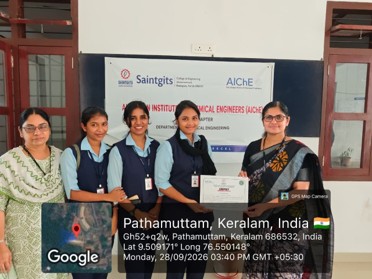
REPORT ON CHEMSKY 2026
COLLAGE MAKING COMPETITION
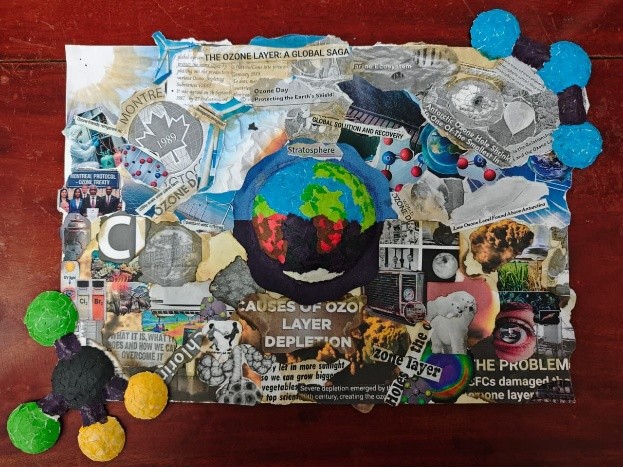
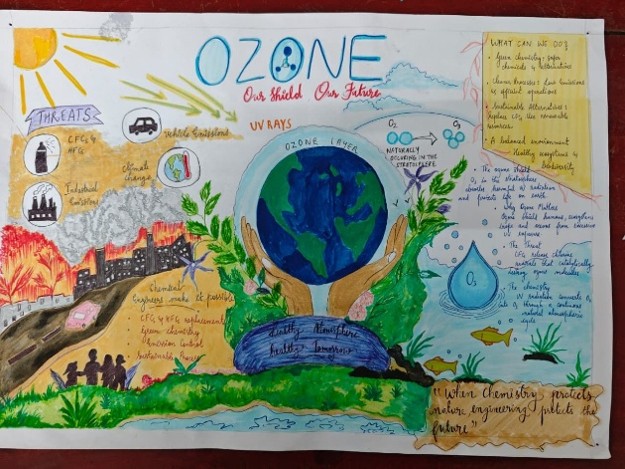
Theme: “OZONE: OUR SHIELD, OUR FUTURE”
Department of Chemical Engineering
Saintgits College of Engineering (Autonomous)
in association with the American Institute of Chemical Engineers (AIChE)
& Indian Institute of Chemical Engineers (IIChE)
| Programme | CHEMSKY 2026 – Collage Making Competition |
| Theme | OZONE: OUR SHIELD, OUR FUTURE |
| Organized by | Department of Chemical Engineering, Saintgits College of Engineering |
| In association with | American Institute of Chemical Engineers (AIChE) and Indian Institute of Chemical Engineers (IIChE) |
| Team Size | 2–3 students |
| Collage Size | A3 sheets |
| Submission Deadline | 15 September 2026, 4:00 PM |
| Participation | Open for all |
| Recognition | Cash prizes for winners |
1. Introduction
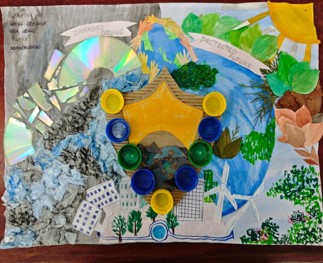
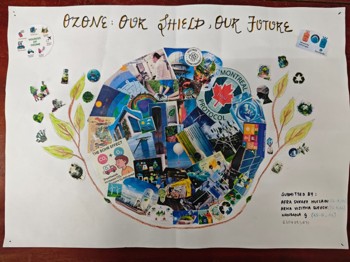
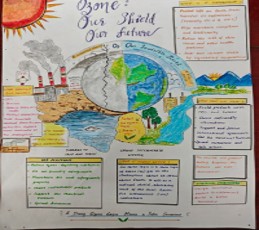
CHEMSKY 2026 was organized by the Department of Chemical Engineering, Saintgits College of Engineering, in association with the American Institute of Chemical Engineers (AIChE) and the Indian Institute of Chemical Engineers (IIChE). The programme was conceived as a creative collage-making competition to engage students in communicating an important environmental issue through visual storytelling. The theme selected was “OZONE: OUR SHIELD, OUR FUTURE”, highlighting the importance of the ozone layer and the need for responsible environmental protection.
2. Objectives of the Programme
- Create awareness among students about the importance of the stratospheric ozone layer and its role in protecting life on Earth.
- Encourage students to explore environmental issues through creative and visual communication.
- Develop creativity, teamwork and presentation skills among participating students.
- Promote scientific understanding of ozone depletion, its causes, impacts and protection measures.
- Encourage students to communicate sustainability and environmental messages in an accessible format.
- Strengthen student engagement through an interdisciplinary activity combining science, art and environmental awareness.
3. Programme Concept
CHEMSKY 2026 provided students with an opportunity to prepare a thematic collage based on “OZONE: OUR SHIELD, OUR FUTURE”. The activity encouraged participants to represent scientific information, environmental concerns, human impacts and possible solutions through images, illustrations, captions, keywords and creative visual arrangements. The competition format enabled students to work collaboratively while translating scientific concepts into an engaging visual message.
4. Participation and Guidelines
The competition was open to all interested students. Participants were required to form teams consisting of 2–3 students. Each team was required to prepare the collage using A3 sheets and submit the completed work on or before 15 September 2026 at 4:00 PM. The activity was designed to provide equal opportunity for students from different academic backgrounds to participate and demonstrate their creativity.
5. Suggested Content Areas
- Role of the ozone layer in protecting life from harmful ultraviolet radiation.
- Causes and mechanisms associated with ozone depletion.
- Environmental and health-related impacts of excessive ultraviolet exposure.
- Ozone-depleting substances and the importance of responsible chemical use.
- International and national efforts for ozone protection.
- Sustainable practices and individual actions supporting environmental protection.
- The importance of scientific innovation and collective responsibility for safeguarding the atmosphere.
6. Skills and Learning Outcomes
Environmental awareness: Improved understanding of ozone protection and atmospheric environmental issues.
Scientific communication: Ability to present scientific concepts through concise visual messages.
Creativity: Development of innovative approaches to visualizing an environmental theme.
Teamwork: Collaborative planning, content selection and preparation of the collage.
Communication: Improved ability to convey complex environmental ideas to a general audience.
Sustainability thinking: Greater appreciation of individual and collective responsibility for environmental protection.
7. Evaluation Framework
The submitted collages may be evaluated based on relevance to the theme, scientific accuracy, creativity and originality, visual presentation, clarity of message, effective use of available space, and overall impact. The evaluation process can be conducted by a panel designated by the Department of Chemical Engineering and the associated professional bodies.
Relevance to Theme: Alignment with “OZONE: OUR SHIELD, OUR FUTURE”.
Scientific Content: Accuracy and clarity of scientific information.
Creativity and Originality: Novelty of ideas and creative visual representation.
Presentation: Layout, composition, readability and effective use of A3 space.
Environmental Message: Clarity and effectiveness of the ozone-protection message.
Overall Impact: Ability to engage viewers and communicate the intended message.
8. Expected Outcomes
- Increased student awareness of the importance of ozone protection.
- Improved understanding of the relationship between chemical substances and atmospheric environmental impacts.
- Enhanced creativity and scientific communication skills.
- Improved teamwork and collaborative learning among students.
- Greater appreciation of sustainable practices and environmental responsibility.
- Creation of visually engaging educational material supporting environmental awareness activities.
9. SDG Alignment
SDG 4 – Quality Education: Promotes creative, experiential and interdisciplinary learning.
SDG 12 – Responsible Consumption and Production: Encourages awareness of responsible chemical use and environmental practices.
SDG 13 – Climate Action: Promotes environmental awareness and protection of the atmosphere.
SDG 17 – Partnerships for the Goals: Strengthens academic and professional engagement through association with AIChE and IIChE.
10. Conclusion
CHEMSKY 2026 provided an innovative platform for students to explore the scientific and environmental significance of the ozone layer through creative visual communication. By combining environmental awareness with a collaborative collage-making activity, the programme encouraged students to think creatively, communicate scientific ideas effectively and appreciate their responsibility towards environmental protection. The theme “OZONE: OUR SHIELD, OUR FUTURE” reinforced the message that protecting the atmosphere requires scientific understanding, responsible practices and collective action.
Faculty coordinators: Dr. Neetha John & Dr. Neeraj V S
- Student Coordinators : The President: Ms. Richa Mariyam Joby, S7 Chemical Engineering
Departmental Events:
- World Water Day – Awareness and technical activities related to water conservation and management.
- World Energy Day – Focused on sustainable energy solutions and innovations.
- Pragati – Saintgits Student Congress – Includes technical competitions such as ChemCar, Chem-quiz, idea pitching, poster making, design challenge, and Chem Jeopardy.
AIChE Activity report 2024-2025 | 2025-2026
Student Outreach Programs:
- Udbhavana – Student project expo for school students to showcase innovative ideas.
- Hitaya (for the welfare of all) – Community outreach survey engaging students in social and environmental awareness.
- Killikkoodu (Curiosity of learning) – Student empowerment program for school students, focusing on skill and knowledge development.
Outreach Activity report 2024-2025 | 2025-2026
IIChE (Indian Institute of Chemical Engineers)
IIChE is a national professional organization that promotes excellence in chemical engineering through knowledge sharing, technical events, and industry engagement. Our departmental IIChE chapter was inaugurated in 2018, providing students with opportunities to participate in competitions, observe national awareness days, and gain exposure to industrial practices. The chapter emphasizes both technical learning and professional development while fostering an understanding of safety, sustainability, and innovation in chemical engineering. The Saintgits IIChE chapter organizes following events:
- Inceptz – National-level idea pitch competition encouraging innovative solutions in chemical engineering.
- Kaliga – National-level quiz competition testing students’ technical knowledge and problem-solving skills.
The IIChE chapter also emphasizes technical learning, offering TechTalks, which are expert lectures and seminars on emerging technologies and trends in chemical engineering, along with AddOns, which are workshops and skill-development sessions designed to enhance practical knowledge and employability. In addition, the chapter observes national awareness days such as Environmental Day, conducting programs and activities focused on environmental sustainability and responsibility. To provide real-world exposure, students participate in industrial visits, gaining firsthand understanding of process operations, workplace safety, and the practical applications of chemical engineering principles.
Activity report 2024-2025 | 2025-2026
Institution of Engineers (IEI)
The Saintgits Students Chapter of The Institution of Engineers (India), IE(I), inaugurated on July 30, 2015, is the largest professional organization in the college, with over 3000 B.Tech students from all departments as members. The Chemical Engineering division of the IE(I) student chapter was started on April 2, 2019, and serves as a platform for students to develop leadership, technical, and soft skills. It facilitates interdisciplinary workshops, seminars, industry exposure, innovation projects, and participation in national and international engineering events, complementing the department’s IIChE chapter by providing broader engineering and professional development opportunities.
The major activities and events conducted by the department’s professional bodies are listed below:
2025-2026
1. Pragati – Annual AIChE student project expo was conducted on 20th February 2026 by AIChE Saintgits Student Chapter to promote innovation and research among students.
2. Killikoodu (Student led activity on knowledge development was conducted on 18th February 2026 at St Johns LP School, Ithithannam, Kottayam by AIChE Saintgits Student Chapter.
3. First Annual AIChE expert lecture was delivered by Prof. Kuruvila Joseph, Pro-Vice chancellor, Indian Institute of Space Technology, Thirvanathapuram on 10th February, 2026
4. UDBHAVANA 2.0 (Annual student project Expo) on the theme Sustainable Development Goals, a school student initiative organized by AIChE Saintgits Student Chapter on 10th December 2025.
5.First international conference on chemical engineering sciences: advances in energy harvesting and storage (CHEMSCAPE 2025) Organized by Dept. of Chemical Engineering, Saintgits College of Engineering (Autonomous), AIChE, and IIChE during October 30 to November 1, 2025.
6. Expert talk on “Digital alchemy: where chemical sciences meet AI” was delivered by Mr. Vincent Thomas Varghese, Founder and director, Skoliko, Kochi, Kerala on 17th October 2025 was organized by SACh and IIChE Student chapter.
7. INCEPTZ’25 – A national-level idea pitch competition organized in association with IIChE and SACh on the theme “Materials for Grenner Planet”, held on 08.08.2025.
8. World Environment Day – Celebrated by AIChE with events focused on the theme “Putting an End to Plastic Pollution”, promoting awareness and sustainable practices among students.
2024-2025
1. Saintgits AIChE student chapter organized World Water Day on 28 March 2025 with the theme “Glacier Preservation”, featuring poster-making, photography, and elocution competitions to raise awareness about water conservation and climate change.
2. AICHE Student Chapter Inaugration 4th April 2025
3. Expert talk By Dr. Yogesh Kumar M, Assistant Professor, Department of CHemical Engineering, NIT Calcitut on the topic Computational tools for sustainable process desing
4. Udbhavana 2025 (Annual student project Expo): Empowering Future – Green Energy for Sustainable Development, a school student initiative organized by AIChE Saintgits Student Chapter on 29th January 2025.
5. Expert talk on the topic “Career prospects for chemical engineers in material science” was organized by IIChE Student chapter by Prof. Prasanna Kumar S. Mural, Assistant Professor, Department of Metallurgical and material science, IIT Bombay on 18.10.2024.
6. Alumini connect was organized by SACh on 27th August 2024 on careers prospects in chemical engineers by Ms. Haritha Harikumar batch of 2021.


