










TEACHING WITH REAL WORLD EXAMPLES
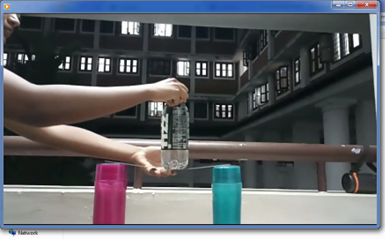
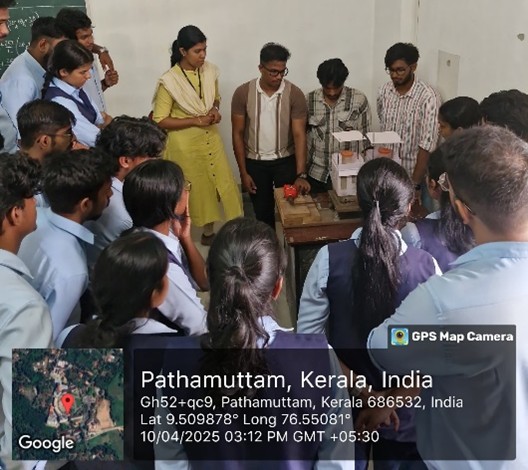
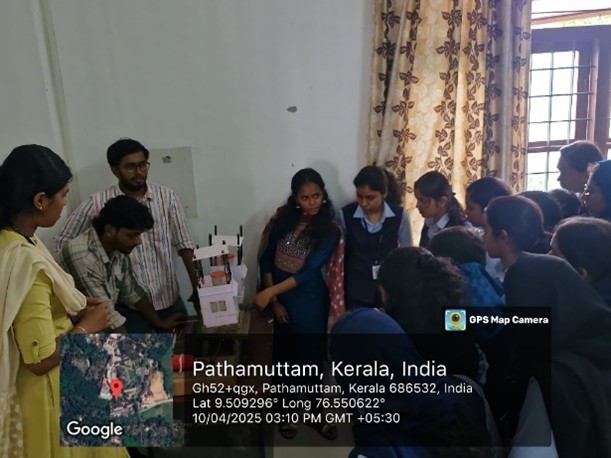
Effect of Damping: A prototype was developed as part of an ongoing project to demonstrate the effect of damping in buildings using scrap tyre pad isolators. It was used to simulate seismic conditions, allowing students to observe how base isolation effectively reduced vibrations and improved the seismic performance of the structure. Link: https://drive.google.com/file/d/1TthmsqqH2iw1ge1fq-XmrXI7T47qF1Le/view?usp=sharing
THINKING ALOUD PAIR PROBLEM SOLVING
Objective: Ability to critically think and apply the concepts studies in different modules
Problem given: A problem was found with finding the consolidation settlement in a selected site. The parameters required for solving the problem relate to what the students studied in first four modules.
Process: Initially students were asked to be in their peer groups and quiz was given through “Hot Potatoes” which were clues for solving the problem. The performance of everyone was assessed through this quiz. Later students were asked to discuss the problem and identify a “Solver” and “Inquirer” from the group. Inquirer will guide the solver to solve the problem. Also, team members posed with questions to assess the individual as well as team performance.
Outcome: Students were able to apply different concepts and also understood how the different basic concepts are applied in field to arrive at solutions for complex problems.
Feedback: Feedback was received from students related to the activity and it revealed that the students were benefitted from the activity. This activity was also reviewed by two faculty members.

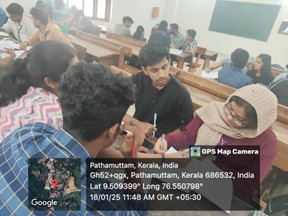
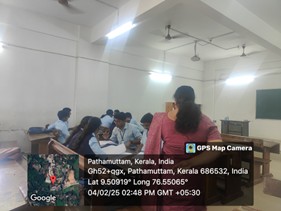
PEER GROUP LEARNING
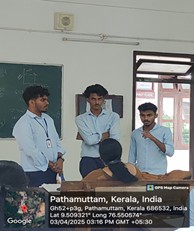
Peer group learning is an interactive and collaborative educational approach in which students learn with and from each other in a supportive group setting. It is based on the principle that peers can effectively share knowledge, clarify concepts, and reinforce learning through discussion, cooperation, and mutual engagement.
FLIPPPED CLASSROOMS
Flipped classroom is an innovative teaching-learning approach that reverses the traditional learning environment. In a conventional classroom, teachers deliver lectures during class time, and students’ complete homework or assignments outside. In contrast, the flipped classroom model delivers instructional content—such as recorded lectures, reading materials, or online resources—before the class, while in-class time is dedicated to interactive, collaborative, and problem-solving activities.
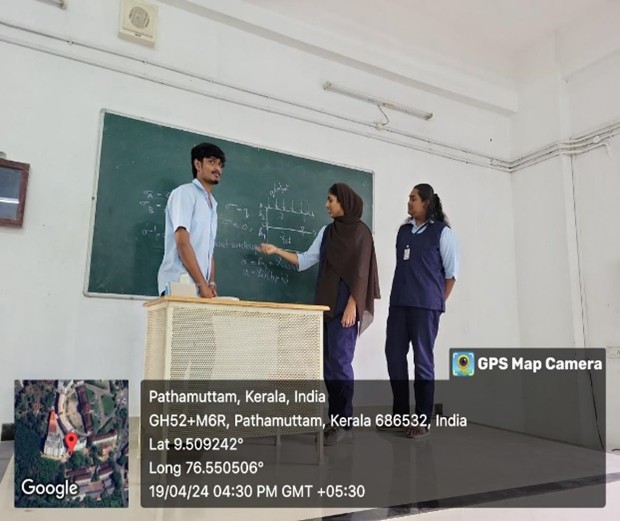
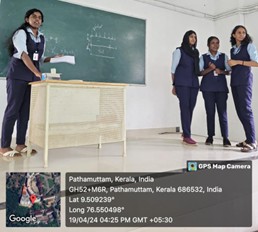
ACITIVITY BASED ASSIGNMENTS
Activity-based assignments are learner-centered tasks designed to engage students actively in the learning process by applying theoretical knowledge to practical, real-life, or simulated situations. Unlike traditional assignments that are mostly descriptive or written in nature, activity-based assignments emphasize doing, exploring, and reflecting as integral parts of learning.